EP 39418 min
Are You Writing For The Right Persona?
with Courtney Klepsch
Challenges assumptions about persona targeting in content marketing.
November 6, 2025Listen
GinaRenee Autrey, Director of Marketing & Strategic Impact at KleinSchmidt, shares how outside-the-box creative campaigns — from Shakespeare-themed dam decommissioning papers to Dr. Seuss-inspired fisheries content — transformed a niche hydropower firm's marketing and generated multi-million dollar results. She explains that the creative process starts by listening to how technical staff naturally talk about problems, then finding unexpected real-world analogies that grab attention in industries where every ad looks the same.
Go deeper on this topic
The Content Alignment Playbook
A practical framework for keeping marketing, sales, and customer-facing teams on the same story.
Story Drift Analyzer
Check how clearly your positioning survives across your website, content, and AI surfaces.
What Is Story Drift?
Why messaging degrades as it moves through teams, channels, and AI systems — and how to spot it early.

GinaRenee Autrey
Director of Marketing & Strategic Impact at KleinSchmidt
Explores the power of concise storytelling and how brevity can improve marketing content.
“When we first ran that ad series it outperformed every other ad that had been done there probably ever. And it was because we grabbed the attention because people was like, why is there a boxing ad in my oil and gas publication?”
“Do this one thing with me. If it doesn't work, we'll go back to the way we did it before. But if it works, then I want us to do more of these. But I need you to give me one chance and one shot.”
“⁓ Over the course of my career. I started my career as an admin supporting a marketing department And then grew into the marketing role and worked in proposals for a while which was Probably the hardest for me because it's very”
The Lobbyist Approach to Marketing Approval
GinaRenee's method of working top-down to get buy-in for creative campaigns — build relationships first, get one leadership champion on board, then work downward through the organization rather than pushing ideas upward
Listen-and-Connect Creative Process
A brainstorming method that starts by listening to how technical staff naturally describe problems, identifying recurring phrases, then connecting those to unexpected real-world analogies that make technical content accessible and attention-grabbing
Creative marketing in technical and niche B2B industries Decision Framework
Use this episode to turn the main idea into a practical decision framework: define the audience problem, the desired business outcome, the proof or example that supports the claim, and the next action the content should create. This keeps the asset grounded in usefulness instead of internal preference.
Ben Ard00:27 — Welcome back to another episode of Content Amplified. Today I'm joined by Gina Renee. Gina Renee, welcome to the show.
GinaRenee Autrey00:33 — Hello, thank you for having me. I appreciate it.
Ben Ard00:35 — Yes, Gina Renee, I am excited because this episode is going to be like the ultimate story time. You have so many cool examples just in the emails going back and forth. I have been thoroughly impressed with your creativity, everything you do in marketing. I'm excited for the audience to get to know you and your story and all that fun stuff. So let's kick it off. If you don't mind sharing, let's let the audience get to know your career and background and all that fun stuff.
GinaRenee Autrey00:49 — Thank you.
Okay, perfect. So I'm Gina Renee Autry and I'm currently the Director of Marketing and Strategic Impact at Klein Schmidt, which is a AEC firm in the hydropower sector, which is a very niche market. I've been here for going on eight years and I've been in the AEC world for over 20 years and worked in construction and on the engineering side.
Ben Ard01:22 — you
GinaRenee Autrey01:22 — ⁓ Over the course of my career. I
started my career as an admin supporting a marketing department And then grew into the marketing role and worked in proposals for a while which was Probably the hardest for me because it's very structured and I'm a little bit more free free-range marketer over here so But did that for a while and ironically enough now I'm actually over the proposal team here as well at Clash Mitts I oversee marketing and proposals here at Clash Mitts
Ben Ard01:49 — I love it. That's so exciting. Gina Renee, and I may call you GR like you said I could. I'll go back and forth. I apologize, but you'll, you'll kind of hear that. What we're going to talk about today, we decided on standing out from the crowd. Now you have some amazing examples of doing marketing campaigns just in a different way that draw on attention and results. Do you mind sharing some of these examples of what you've built?
GinaRenee Autrey02:02 — Yes.
Ben Ard02:16 — ⁓ in the past that have been maybe a little off the beaten path from other typical marketing initiatives.
GinaRenee Autrey02:22 — Sure.
Getting in that outside the box area really started probably when I was working in the oil and gas sector for their industrial division. And we had a really talented graphic designer that worked with us there. And so we had the we got together and came up with these ideas to do some outside the box advertising for them. And when we first presented our ideas, you know, we kind of got these blank stares of you want to do what? And so we really had to like
build our case and say we really think this could stand out because if you open any industrial type publication all of the ads look the same and it would be like we build this type of facility and we're the greatest at building this type of facility and here's a facility we built and so it was like we knew we had to do something something a little bit different so their industrial division was a smaller division of their overall large big behemoth corporate
self that was oil and gas. So we did the first time we really stepped out of the box was doing a campaign there where we used a female boxer.
as our ad and she was positioned like she was getting ready to fight and it said you know we may be viewed as a smaller player but we're more agile, can respond quicker, know throw heavy punches you know with the best of them kind of thing and when we first ran that ad series it outperformed every other ad that had been done there probably ever.
And it was because we grabbed the attention because people was like, why is there a boxing ad in my oil and gas publication or my industrial publication? And when they saw the ad, they automatically, especially the digital, they click on it. They're like, what is this? And so it was the digital performed astronomically well. And the print ads, we got a lot of good positive feedback as well. So.
Once we were able to show how it made a difference in the ROI, then it was like, okay, yeah, y'all can do some more of that. And so that's kind of where it started and continued on where I could because working in larger companies, was hard to get buy-in sometimes. And then when I came to Kleinschmidt, I was really able to build a marketing program from the ground up here and
had a lot more freedom. So I did still have to take the ideas and the first really outside the outside the box idea here that was going to be a large-scale campaign
was a challenge to get through the approval process. I'm not even gonna lie. It took us probably six to eight months to get it approved, to get everybody on board because I had to have not just the buy-in of our leadership, but also the buy-in of the technical staff who were gonna be contributing to this thought leadership piece that was part of the campaign. So I had to convince these engineers and scientists and PhD folks that are very technically knowledgeable and phenomenally smart
why I wanted to do something that sounded so crazy. And it was basically using ⁓ a theme of Shakespeare to talk about damn decommissioning. And it was to be or not to be, that is the damn question. And we use like Shakespeare leaning over this damn that looked like it was had seen better days. And so it was to tackle a problem that in the industry of you know, there's a lot of
hydropower facilities that are either powered or non powered that are very old and either need to come down and be decommissioned and and that goes through like a whole government approval process or be removed or they need to determine if they indeed need to repair it and fix it and keep it because it's you know making money for them. So it was a very heavy topic that we didn't want to go at it in such a heavy way we wanted to give them something to think about.
So the entire paper had a Shakespeare theme. We even had like a playbook as an addendum to go with the paper. All the graphics and imagery were very focused on Shakespearean themes throughout. And that ended up being at that time the highest performing campaign in the history of the company. And it actually brought in multi-million dollars worth of work.
and so being able to show the success of it and not only the, the work that was coming in, all the stats and analytics and all the great stuff, showing, know, just how well this thing had performed. kind of also started this industry buzz where, you know, we were doing something different and we were standing out from the crowd and standing out from our competition and industry associations that we engage with national hydropower association in particular took notice of that.
And I've actually ended up being a vice chair on their public affairs committee to help them with some of their messaging as well. And that started last year. So it's been like this journey that didn't just impact my company, but it impacted our industry as a whole. Really cool. Yeah.
Ben Ard07:04 — love that. That's incredible. That's so cool.
Okay. I got a lot of questions about all of this kind of stuff. Number one is that six to eight month period when you were trying to get approval, what was the tipping point? How did you manage to pull that off? I think there's a lot of marketers that are like, yeah, I've been facing months of trying to get people on board. Were there any initiatives or things that you did that like really moved the needle?
GinaRenee Autrey07:09 — Okay.
Yes. Yep.
So the big thing was, you know, we had meetings and the content was coming together great, like the base content. But it was weaving in that theme and letting them understand that we wanted to do something different, that this was not a journal, technical article that had to be peer reviewed. And this was a marketing salesy piece where we were really trying to explain to people in a different way, just to get them to engage with us and talk about their problem.
and how we could help them with it. And so it was getting them out of the mindset because most of the technical staff was used to doing these technical peer reviewed articles that other people like them read to learn, right? So it was getting them out of that mindset. And luckily I had support from several people on our leadership team. So I had basically...
kind of work as like a lobbyist to lobby my leadership team, get them on board, and then kind of work it from the top down. I think if you try to work it going up, you're not gonna have success, you're just gonna get stuck. But if you can get the leadership buy-in, and the whole point I made was do this one thing with me. If it doesn't work, we'll go back to the way we did it before.
But if it works, then I want us to do more of these. But I need you to give me one chance and one shot. So I have been here for three plus years. I wanted to make sure I had a very firm relationship here, that people respected me and all the things before I started like trying to get them to do these wild, crazy ideas. So making sure I had developed the right relationships early on.
to help me get the buy-in that I knew I was gonna need. It was kind of key to that. So you had to be very strategic and do a lot of strategically around getting ready to present these ideas, but start from the top. And if you've got one person that gets marketing and gets what you're doing and gets your idea, let them help you go up the next level if you have to to get the highest level buy-in and then work your way down. Much easier to work your way down than it is to work your way up.
Ben Ard09:28 — Okay. I love that work from the top down, put yourself in the mindset of a lobbyist, kind of get the right people on board. Lots of education in the process. and then I also love you had built up the rapport and the trust in advance. think that coming into a brand new company, you might need to wait just a little bit, build that up, build a reputation. And I also love that you also kind of put it on the line to say,
GinaRenee Autrey09:33 — Yep. Yep.
Ben Ard09:54 — If this works, I want some leeway for some of the next ideas that are coming. And it's a lot easier for someone to commit to that beforehand. And so it's, uh, I love that process. Now I want to dive in GR to your creative process. Shakespeare, the to be or not to be all that kind of stuff does not like.
GinaRenee Autrey10:06 — Thank you.
Okay.
Ben Ard10:18 — hit you on the head all of a sudden. What was your process for coming up with some of these ideas? What's the natural process for you to take what are two seemingly completely disrelated objects and ideas and combining them into a method that really does attract people and help them understand your message?
GinaRenee Autrey10:36 — Okay, so I guess the way those things happen has kind of changed over the last couple of years with AI and having the ability to run things through AI and kind of vet your ideas a little bit and get some more meat behind them before you present them. So that has been like super helpful and enabling us to do, we're gonna be doing a lot more.
than we were able to do before. But from the creative standpoint, was really getting, you know, sitting down with the technical team members first and getting with the people who were going to be responsible for writing the paper and just kind of listening to how they talked about it, how they talked about the M.D. commissioning. And, you know, when it came, the term kept coming up. Well, is it going to be this or is it going to be that? You know, they've got to determine if it's going to be this or going to be that. And so that
those words just kind of kept spinning in my brain. And we had a brainstorming meeting and we threw a bunch of ideas out there. Some of them were even wackier than the Shakespeare. But we kind of narrowed it down to okay, and it was a team effort. So narrowed it down to okay, this this one kind of rose to the top being the Shakespeare idea. So usually it starts with brainstorming and just listening to how the technical staff talk about the topic.
And then trying to figure out what's a different way that we can approach it than just from this technical standpoint. How does other things in the world apply to this? And so the same concept kind of applied to the fisheries paper that we just did, which is a Dr. Seuss theme that we used based on the one fish, two fish.
We actually had one of our staff members when they were talking, you we kind of were going through, well, there's so many fish, you know how many fish there are. And it just sounded like a line from a Dr. Seuss. So a lot of it is really just listening and listening to how the technical staff talk about stuff. And then looking outside of your own box of what in the world could apply to this? Like what out there could apply to this?
And the same thing came up with an ad that we did restoring a classic where we used an old muscle car restoration ad to represent restoring a dam because dams are the classic renewable. It's been here forever. know, hydropower's been here forever. But a lot of them are old and they need to be fixed up. You don't just throw them out ⁓ on the flip side from the decommissioning. So
modernization of dams. So taking something that's really cool like a muscle car and restoring it and we're going to have like a whole series of these ads where we're going under the hood doing all these different things but it started with you know just the concept of a muscle car. And another ad series we did around dams because there's a lot of things with dams as far as like
how do you know when you need to replace generators, replace turbines, know, replace all the different parts and components. So we did like a dashboard from a car of when your check engine light comes on. Instead of saying check engine, said check your damn. So that one was a very high performing. So we've tried to do things that you just have to look at what you're representing, what could relate to that.
Ben Ard13:27 — Hahaha
GinaRenee Autrey13:37 — you know, how could you, you how is that relatable? You know, you need to check your dam out. You need to maintain your dam the same as you maintain your car. So just kind of tied those together. So it's really brainstorming and then just kind of throwing a bunch of ideas on the wall and going through them until you get one that sticks. Cause we might have 12 ideas for campaigns and we only go with three of them. That really, they're really gonna work and really gonna fit and
that we can come up with some really cool imagery. But it also helps that we work with a very, very talented graphic designer. We do not rely on AI for our graphic design stuff yet, but we work with a very talented graphic designer who is able to take all these crazy ideas and turn them into something visually compelling. So.
having that type of person that can get what you're talking about and not look at you going, what? But instead be like, yeah, we got this, let's do this. So having that kind of person has been really helpful as well.
Ben Ard14:27 — I love that there's so many insights there. The connection to real world objects, the ability to understand what's going on with a problem and how that relates to other things. Also the supportive team. I love how you talked about. We've got someone behind us that says, yeah, we can do that. And instead of, have no idea what you're talking about and I don't like the idea. I think those are all key aspects.
GinaRenee Autrey14:51 — Absolutely.
Ben Ard14:51 — GR, we actually have run out of time. These episodes go by so quick. I love this. This was amazing. Thank you for first and foremost doing marketing the right way, making things exciting and fun. And thank you for sharing your process with us and our audience. It's so kind of you. For anyone listening who wants to reach out and connect with you online, how and where can they find you?
GinaRenee Autrey14:55 — you
Thank you.
LinkedIn, Gina Renee Autry, let me up, connect with me. I always love to hear from other marketers and share ideas and learn from others, especially younger folks. I love to hear the fresh ideas. So would love to hear from anyone who wants to reach out.
Ben Ard15:29 — Love it. Gina Renee, thank you so much for the time, insights and everything today. I really do appreciate it.
GinaRenee Autrey15:34 — Thank you.
About the guest
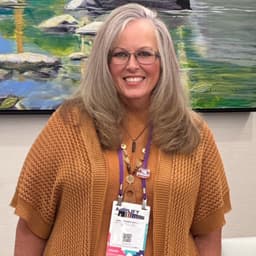
Director of Marketing & Strategic Impact at KleinSchmidt
Director of Marketing and Strategic Impact at KleinSchmidt, an AEC firm in the hydropower sector. Over 20 years in the AEC world spanning construction and engineering. Started as an admin supporting a marketing department and grew into marketing leadership, now overseeing both marketing and proposals. Known for outside-the-box creative campaigns.
Continue Exploring
A practical framework for keeping marketing, sales, and customer-facing teams on the same story.
Open the playbookGet new episodes in your inbox
Join listeners who get episode summaries, key takeaways, and content strategy insights every week.
GinaRenee Autrey recommends listening to how your technical staff naturally talk about their subject matter, then finding unexpected real-world analogies that connect to those themes. For example, when engineers kept saying 'is it going to be this or that' about dam decommissioning, it inspired a Shakespeare 'to be or not to be' theme. The key is brainstorming multiple ideas, narrowing to the strongest ones, and pairing them with a talented designer who can execute the vision visually.
GinaRenee's approach is to work top-down rather than bottom-up. Build strong relationships and credibility over several years first, then find one leadership champion who understands marketing and can help advocate upward. Frame the request as low-risk: 'give me one chance — if it doesn't work, we go back to the old way.' Her Shakespeare-themed campaign took six to eight months to get approved but became the highest-performing campaign in company history.
Absolutely. GinaRenee's Shakespeare-themed dam decommissioning paper generated multi-million dollars worth of work and became the highest-performing campaign in KleinSchmidt's history. The campaign worked because it tackled a heavy technical topic in an accessible way, grabbed attention in publications where every other ad featured a facility photo with generic copy, and was backed by solid technical content written by engineers and scientists.
GinaRenee starts by sitting down with technical team members and listening to how they naturally discuss the topic. Key phrases and patterns become inspiration — like technical staff saying 'so many fish' leading to a Dr. Seuss theme, or 'restoring old dams' connecting to muscle car restoration. The team then brainstorms a dozen or more ideas, narrows to the three strongest, and works with a graphic designer to create visually compelling executions.
Join listeners who get episode summaries, key takeaways, and content strategy insights every week.