I started by rebuilding our entire website
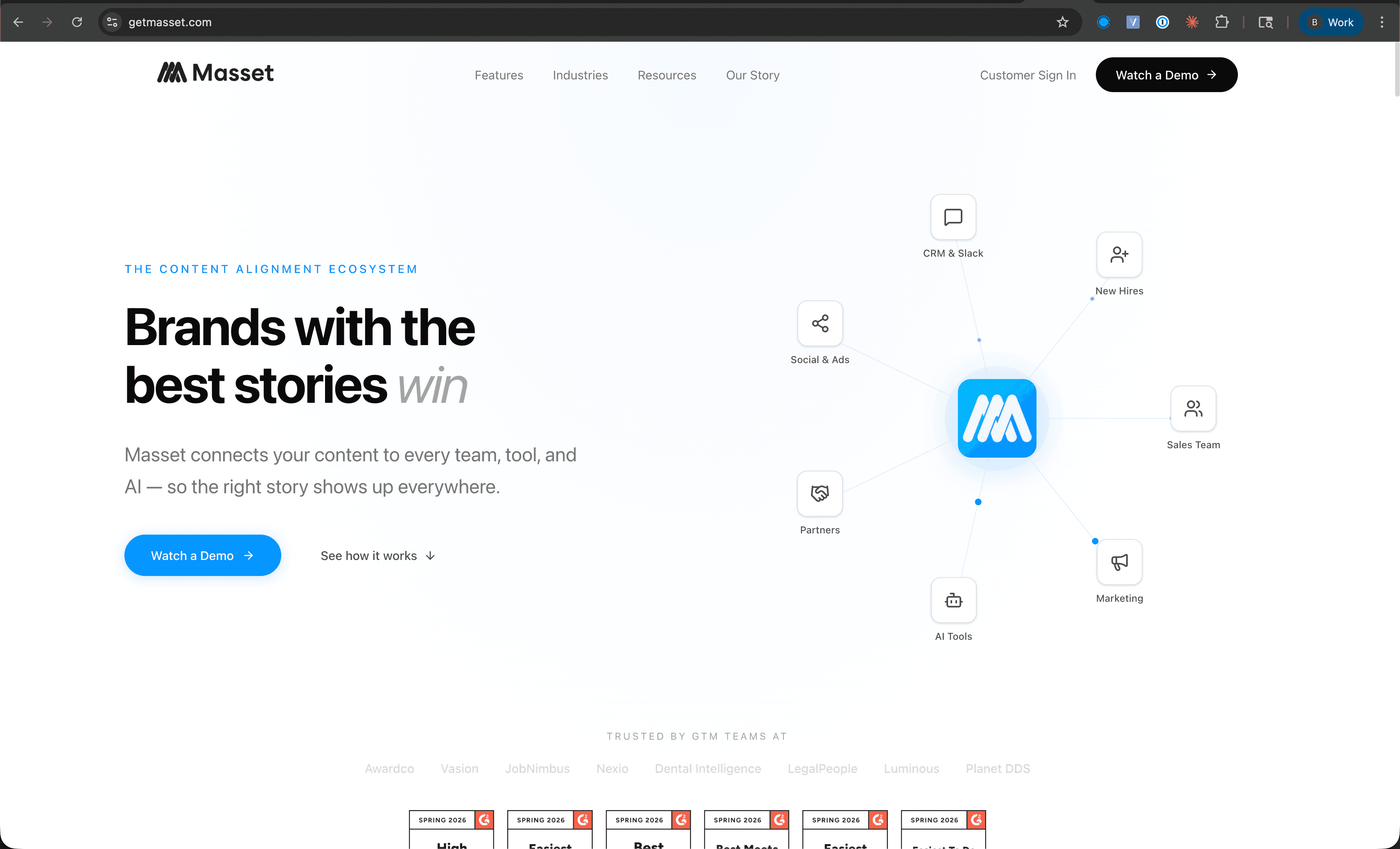
The first thing I made was our company website. We had an old one built in Webflow, and I rebuilt the entire thing inside a tool called Claude Code. I am still a little surprised I get to say that out loud.
Here is what hooked me. Every time the site needed a change, I did not file a ticket or wait on a developer. I opened a chat and described what I wanted, whether it was a broken link, a page that needed new copy, or a meta description that was quietly hurting us in search. I could paste in whatever Google Search Console flagged, or whatever Ahrefs found, and watch it get fixed in minutes.
Then it got bigger. When we changed a product name or sharpened our messaging, I did not have to hunt through the site page by page. I could ask it to find every place the old wording lived and update all of them at once.
That is when it clicked. For the first time, I could build and change real things myself, the things I used to wait on other people for.
Everything I built was living in GitHub the whole time
Here is the part I did not see at first. Every one of those changes was being saved into GitHub the entire time, and that is what made all of it safe to do.
Let me back up and say what GitHub actually is, in plain terms, because nobody ever explained it to me either. A repository, or repo, is just the home for one project. It is a single place that holds all the files for the thing you are building, whether that is your website, a tool, or anything else. GitHub is where that home lives and stays organized.
The part that mattered most to me is this. GitHub remembers every version. My co-founder, Tyler, put it in a way that finally made it land. You know Time Machine on a Mac, the backup that lets you go back to how your computer looked last Tuesday? GitHub is Time Machine for the things you build. Every time you save your work, it keeps a snapshot. If a change breaks something, you do not panic. You go back to the version that worked.
That changes how it feels to build. You get your own repo, your own space, and you can try things and break things and it is not the end of the world. I was not touching our actual product or anything sensitive. It was a sandbox that was mine to mess up. Knowing I could always go back is the only reason I was brave enough to build at all.
Then I built a real tool, and it took a week, not two months
Editing a website is one thing. The bigger unlock was realizing I could build real software, the kind people actually use.
We had noticed a problem in our own business. When a company is small, the founder knows the product and the customer and the story cold. As the company grows, that story starts to drift. More people tell it, each in slightly different words, across more teams and tools and channels. It turns into a game of telephone. At one end is the clear, true story of what you do. At the other end is your customer, hearing a version that has been translated so many times it sounds generic and confusing.
So I built a tool to measure it. It is called Story Drift. It lets a company put its story in, quiz the people who tell it every day, and see in plain numbers how far the message has drifted from the truth, and where to fix it. I built it myself, using GitHub and Vercel and a few other tools I had just learned.
It was not a one-prompt wonder. It took me about a week, and some of that week was confusing. But here is the number that still gets me. In the old world, an idea like that would have meant a month or two of a developer's time, if it got built at all. I built it in a week, as a marketer, and I never once hit a wall where I felt like I was not allowed to keep going.
“I built it in a week, as a marketer.”
Then I put it live on the internet myself
The last surprise was how it got online. I always assumed putting something on the internet was its own dark art, the thing you definitely needed an engineer for. It was simpler than that.
Here is the whole trick, in plain terms. My code lived in GitHub. I connected that GitHub repo to a service called Vercel. From then on, every time I saved my work to GitHub, Vercel automatically published the new version to the live site. There were no files to move around and no server to manage. I saved my work, and a minute later it was live for anyone in the world to open.
I still remember the first time a site I built went live at a real address, and I hooked it up to Google Search Console and shared the link with people. A lot of running a website is not glamorous. The settings, the pages, and the links matter enormously for getting found in search, and almost not at all to the person using the site. Having a system I owned handle that, instead of waiting in someone else's queue, was the moment this stopped feeling like a side experiment and started feeling like my job.
“The fear that you are not technical enough to build is the dangerous thing, not the building.”
If you want to try this, here is what helped me most
Find a technical person in your life if you can. My co-founder Tyler explained the concepts I kept tripping over, and he set me up with a safe place to experiment, a space where I could break things without touching anything real or sensitive. If you do not have a Tyler, AI can play that role more than you would expect. It will explain any of this to you in plain language, as many times as you need.
The real skill is not coding. It is learning how to direct AI well, how to describe what you want, where to point it, and how to ask for the change you actually need. That gets better fast with practice. The confusing days got a lot less confusing once I learned how to ask.
Two cautions, because they matter. Keep asking the AI the obvious questions out loud: is this safe, is this secure, is this the right way to do it? And before you touch anything important, or anything with security or customer data involved, get a real human who knows what they are doing to check it. Start in your own sandbox, where breaking something costs you nothing.
What I actually believe now
I opened by telling you I thought GitHub was built for someone else. I was wrong about that, and I think a lot of marketers are about to find out the same thing.
Here is what I actually believe now. The fear that you are not technical enough to build is the dangerous thing, not the building. You do not have to hand your job to AI, and you should not. Bring your creativity. Hold your standards for quality and story and message as high as they have ever been. But use AI to build, because the days of waiting on a developer to make your idea real are over. The tools are already in your hands.
You do not have to start with a whole website or a working tool. Open a repo of your own, somewhere safe, and change one small thing. That is the entire leap. The first time you watch something you made go live, you will never think of GitHub as an engineer's tool again. You will think of it as yours.
Key Takeaways
- Before AI, most marketers never had a reason to touch GitHub. The moment you start building with AI, that changes.
- A repository (repo) is just the home for one project. GitHub keeps it organized and remembers every version, like Time Machine for the things you build, so you can experiment and always go back.
- Connect a GitHub repo to a service like Vercel and your work goes live on the internet automatically every time you save. There is no server to manage.
- A marketer can build real, useful software now. One tool that used to mean a month or two of developer time took about a week to build.
- The real skill is not coding, it is learning to direct AI well. Start in a safe sandbox, keep asking whether things are safe and secure, and have a human check anything sensitive.