The proof is already on the call
Somewhere in your call recordings is a case study you'll never write.
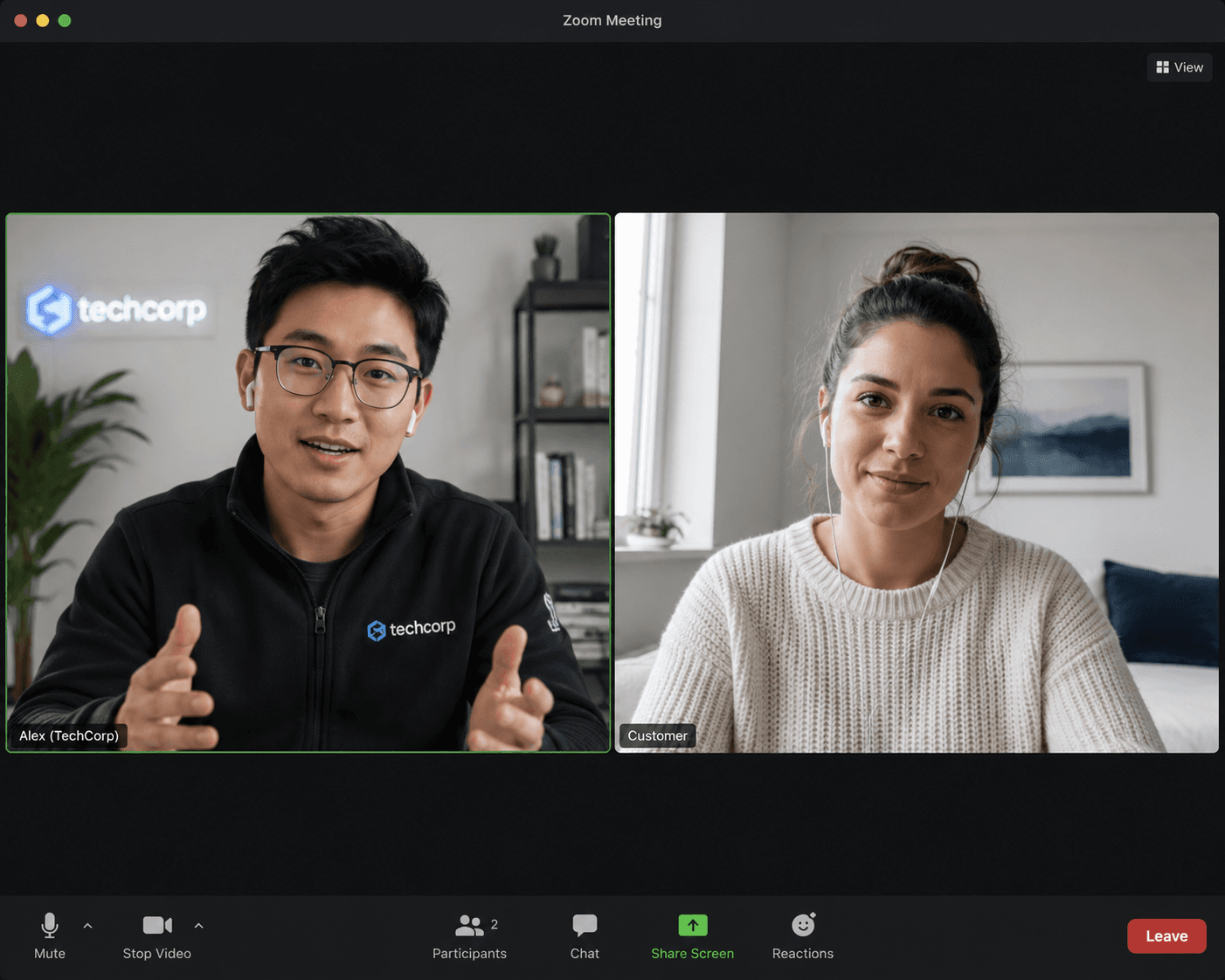
It's in the QBR where the customer said your tool saved them half a day a week. It's in the renewal call where they admitted they almost churned, then didn't, and explained exactly why. It's in the win-story interview your CS team recorded six months ago and nobody has touched since.
The proof is already on the call. The reason it never becomes a case study is that turning a messy, 45-minute, "um, like, you know" transcript into something publishable feels like a writing project. And writing projects need a writer, a template, three rounds of customer review, and a free week nobody has.
So the transcript sits in a folder. The proof dies there.
Here is the part most people miss. A case study is not a writing project. It is an extraction job. The finished story is already in the transcript, in better words than a marketer would ever invent. Your job, and the AI's job, is to pull it out and put it in order.
Why "write me a case study" gets you slop
Most people try this once. They paste the transcript into ChatGPT, type "write a case study from this call," and get back something that sounds like every case study ever written. "Company X was facing challenges with efficiency. They chose our solution. Now they are seeing great results." Vague. Bloodless. Obviously written by a machine.
Then they decide AI can't do case studies, and go back to not making them.
The problem is not the AI. It is that you gave it no shape. Asked to "write a case study," a model reaches for the average of every case study it has ever seen, and the average is mush. The fix is to stop asking it to write, and start telling it exactly what to find.
Give it the shape
A good case study has a spine. Four parts:
- Where they started. Their situation before you, in their words.
- What was broken. The specific problem, what it cost them, the thing that finally made them go looking.
- What changed. What they did with your product, and the moment it clicked.
- What they got. The result. Numbers if they gave you numbers, the felt difference if they didn't.
Hand the AI that spine and the transcript together, and tell it to fill each part using what the customer actually said. Now it is not inventing a story. It is sorting one you already captured.
Here is the prompt I use:
You're helping me draft a customer case study from a call transcript.
Do not invent anything. Use only what is in the transcript.

Structure the draft in four parts:
1. Where they started (their situation before us)
2. What was broken (the problem, and what it cost them)
3. What changed (what they did with the product, the turning point)
4. What they got (results, in numbers if stated, in their words if not)

Rules:
- Pull real quotes verbatim. Mark each one [QUOTE] so I can verify it.
- Keep their voice. Messy and specific beats polished and generic.
- After the draft, list every fact you'd want but couldn't find in the
  transcript (missing metrics, job titles, dates), so I know what to chase.

Here's the transcript:
[paste]Make it quote, not paraphrase
The single most valuable thing in the transcript is the customer's own words. Not because they are eloquent. Because they are real.
"We went from spending half a day chasing the right deck to about thirty seconds. It's honestly stupid how much time we got back." No marketer writes that sentence. It is too specific, too casual, too human. That is exactly why it works. A buyer reads it and believes it, because it sounds like a person, not a brand.
So tell the AI to quote, not summarize. The verbatim rule does two jobs at once. It keeps the customer's voice in the draft, and it stops the model from quietly inventing a quote that sounds plausible but was never said. You check each marked quote against the recording. That is how you ship a case study you can stand behind.
“No marketer writes 'it's honestly stupid how much time we got back.' That is exactly why it works.”
Make it flag the holes
A transcript almost never has everything. The customer mentioned a result but not the exact number. They described their role but not their title. They named a competitor and you are not sure you can print it.
A normal first draft hides those gaps. A good one surfaces them. That is what the last rule in the prompt does. After the draft, the AI hands you a list of what is missing. "Confirm the exact percentage here. Check her title. Verify you can name the previous tool."
Now you have a punch list instead of a blank page. You send the customer two quick questions instead of asking them to write a quote from scratch. The thing that used to take a week takes an afternoon.
Stop letting the proof die in a folder
Think about how many calls your team is on every week. Discovery calls, QBRs, renewals, support saves, the offhand "oh, this changed everything for us" in a check-in. Each one is a case study you are not making. The proof is piling up in a folder of recordings, and it is going stale.
The reason it stays there was never a lack of stories. It is the friction of turning a mess into a draft. AI takes that friction down to about twenty minutes, as long as you give it the shape and make it quote the customer instead of inventing one.
So pick one call. The best customer moment you can remember from the last month. Pull the transcript, give Claude the spine and the rules above, and read what comes back. You will have a draft, and a short list of things to confirm, before your coffee is cold.
The story was always there. You just have to get it off the call.
Key Takeaways
- The proof for your best case studies is already sitting in call recordings. The work is extraction, not writing.
- 'Write me a case study' gives you generic slop because the AI has no shape to follow. Give it the spine: where they started, what was broken, what changed, what they got.
- Tell the AI to quote the customer verbatim, not paraphrase. The real, messy words are more believable than anything a marketer would write, and the verbatim rule stops the model inventing quotes.
- Have the AI flag what's missing (metrics, titles, permissions) so you finish with a punch list instead of a blank page.
- This turns a case study from a week-long project that never happens into a 20-minute draft, so the proof stops dying in a folder.