This started as a test of Codex, not as a book.
I did not sit down this morning planning to make a children's book. I sat down wanting to see what OpenAI's Codex could actually do when I pushed it past code and web pages.
But there is a second belief underneath this project, and it is the one that picked the format. Some ideas are easier to learn through a metaphor than through a diagram. "How does a large language model work" is one of those ideas. Most explanations either drown you in math or hand-wave so hard that nothing sticks. A story can carry the same mechanics in a way a seven-year-old can follow, and honestly, in a way most adults will follow better too.
So the test became: can AI write and illustrate a book that explains AI, truthfully, at a bedtime-story level? One day later I have an answer, and you can judge it yourself below.
We found the story before we built a single page.
The process did not start with images. It started with a long conversation about the concept, because I really do believe in finding the story first. We went through a pile of candidate analogies for how a language model works before landing on the one that carries the whole book: a mapmaker who has studied millions of maps of human sentences, and who builds new roads one stone at a time.
Once the analogy held up, the rest followed in order. The outline. The general shape of each page. The art style, which we hunted for separately before committing. Then the slow part: stitching the words, the captions, and the illustrations together so each page teaches exactly one thing about how the machine works.
That order matters. If I had asked for "a children's book about AI" in one shot, I would have gotten something generic. The story was the work. The pages were the output.
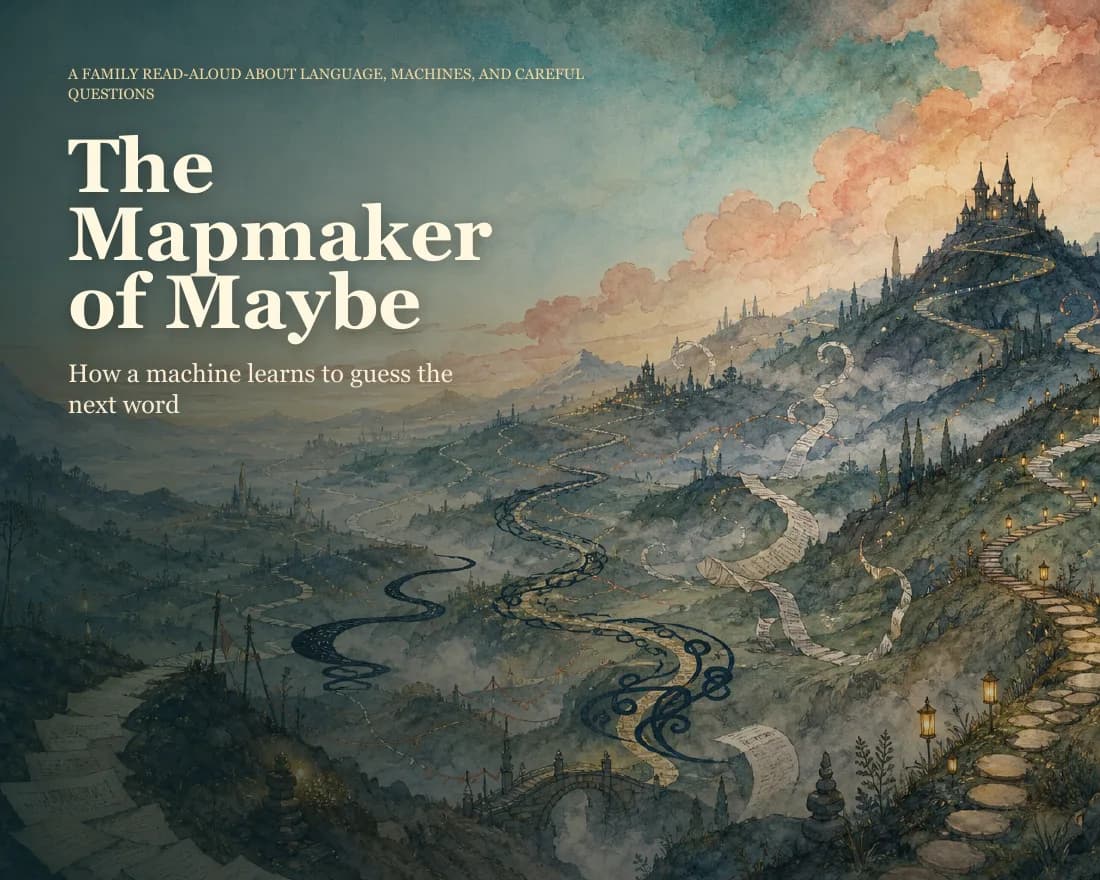
Read the whole book: The Mapmaker of Maybe.
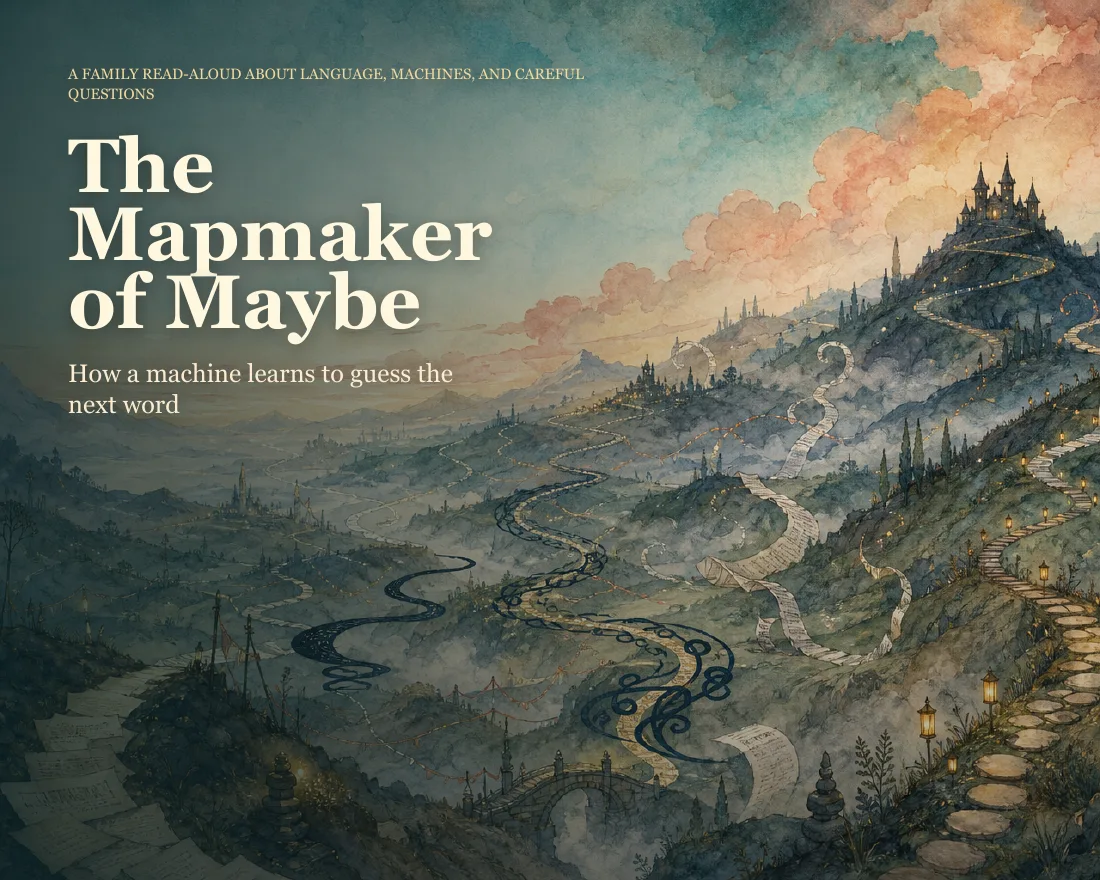
Here are all 14 pages. It reads aloud in about five minutes. Every page also carries a small caption that translates the metaphor into plain language about how a language model works, so adults get the lesson while kids get the story.
Cover
Page 02 / 14
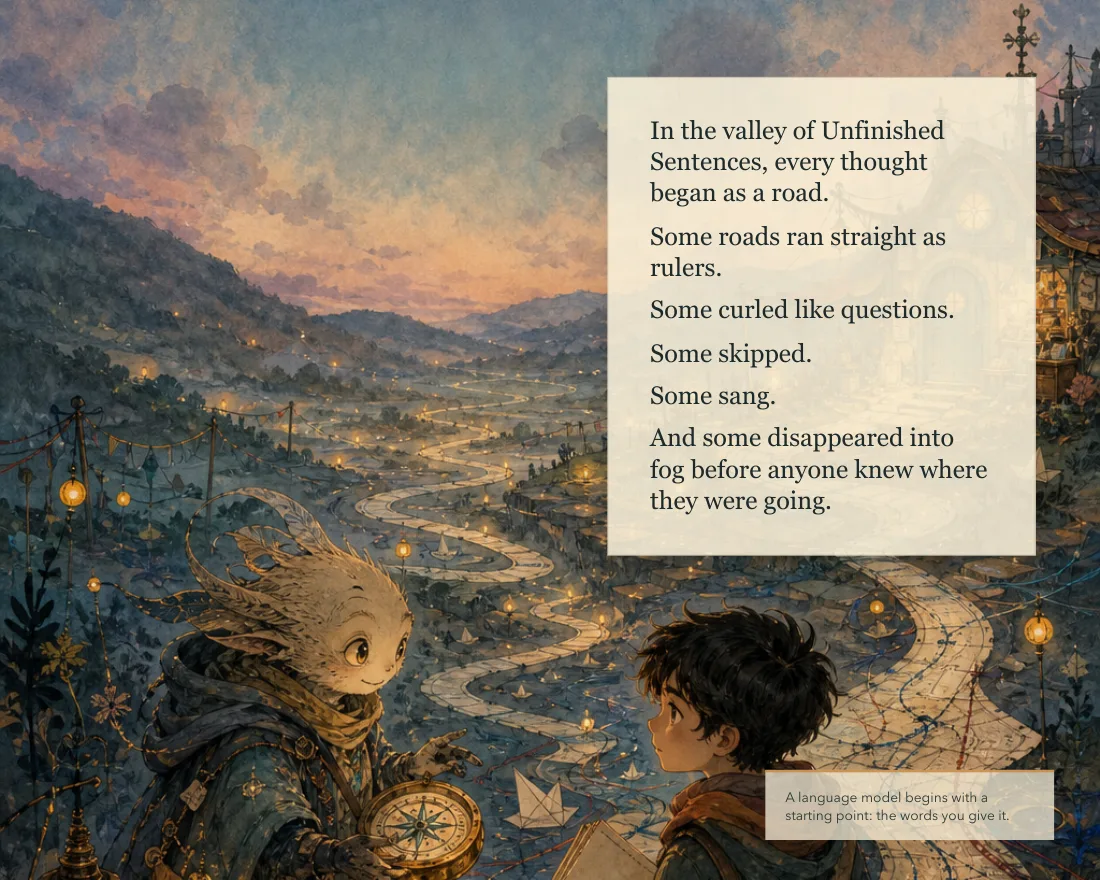
Page 03 / 14
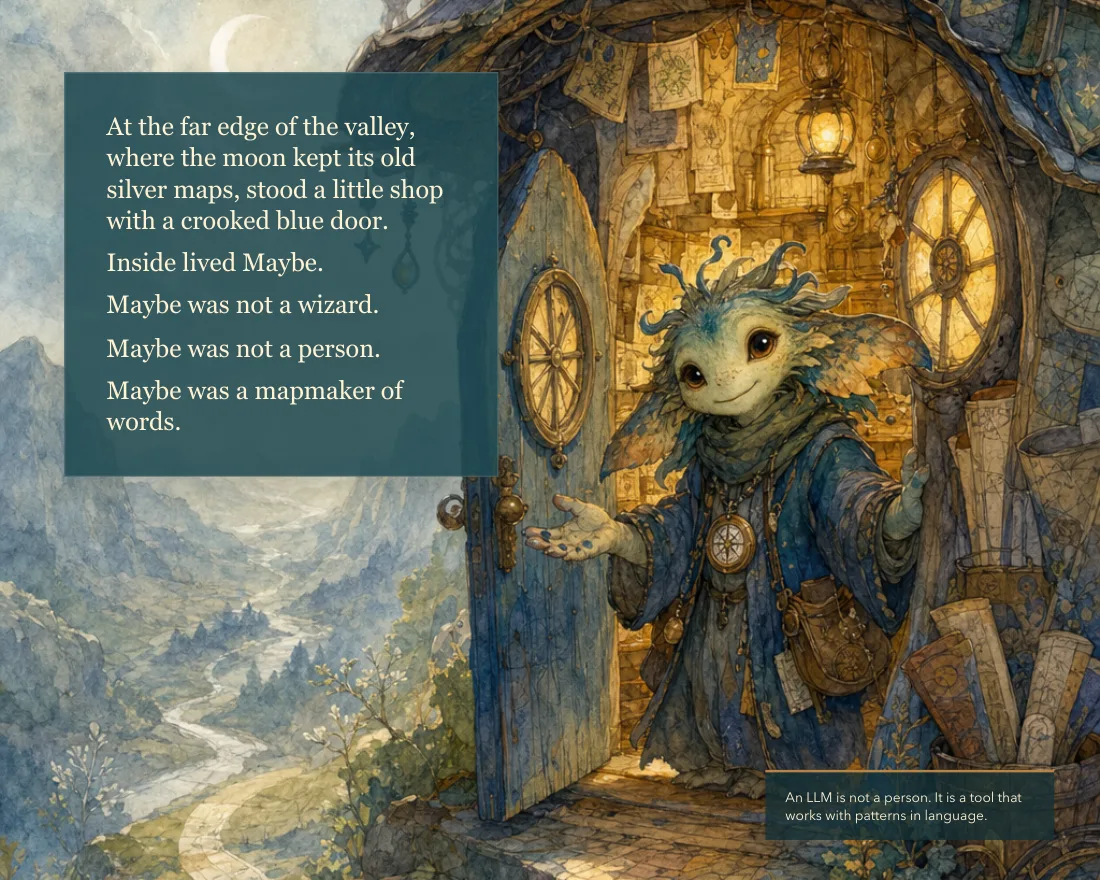
Page 04 / 14
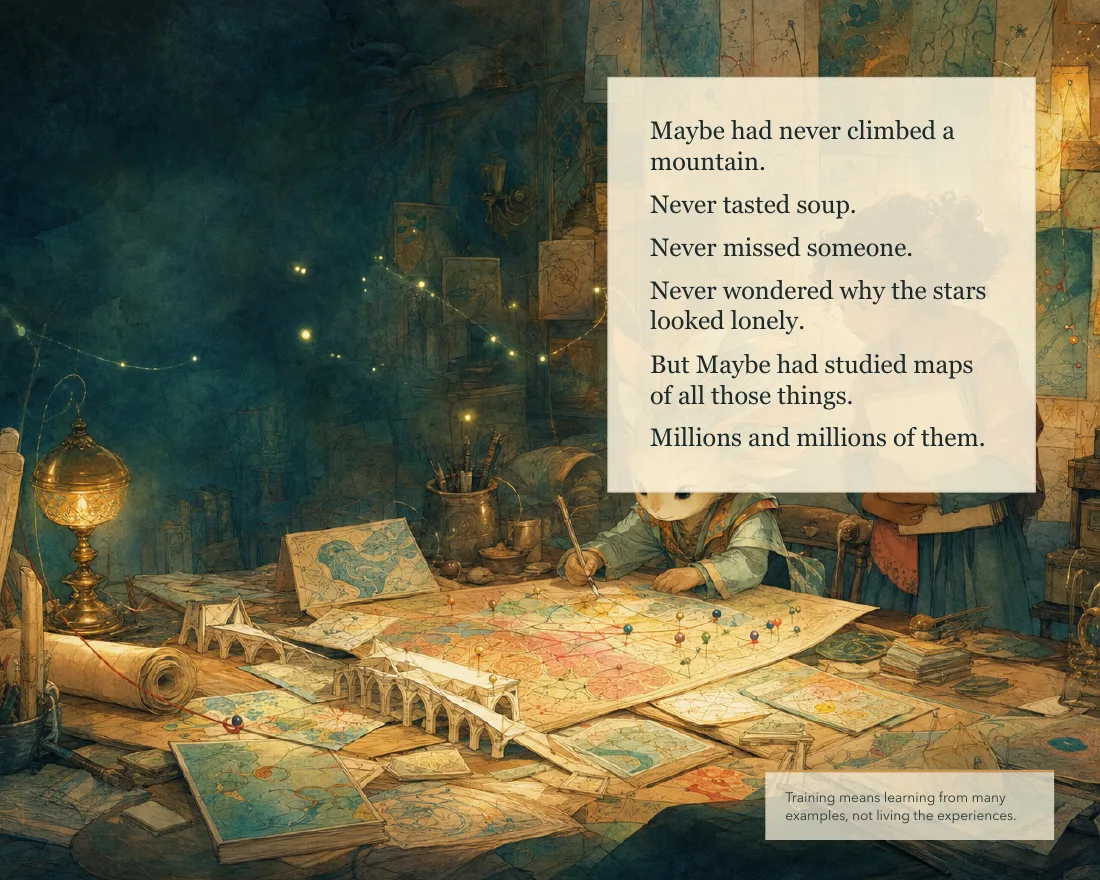
Page 05 / 14
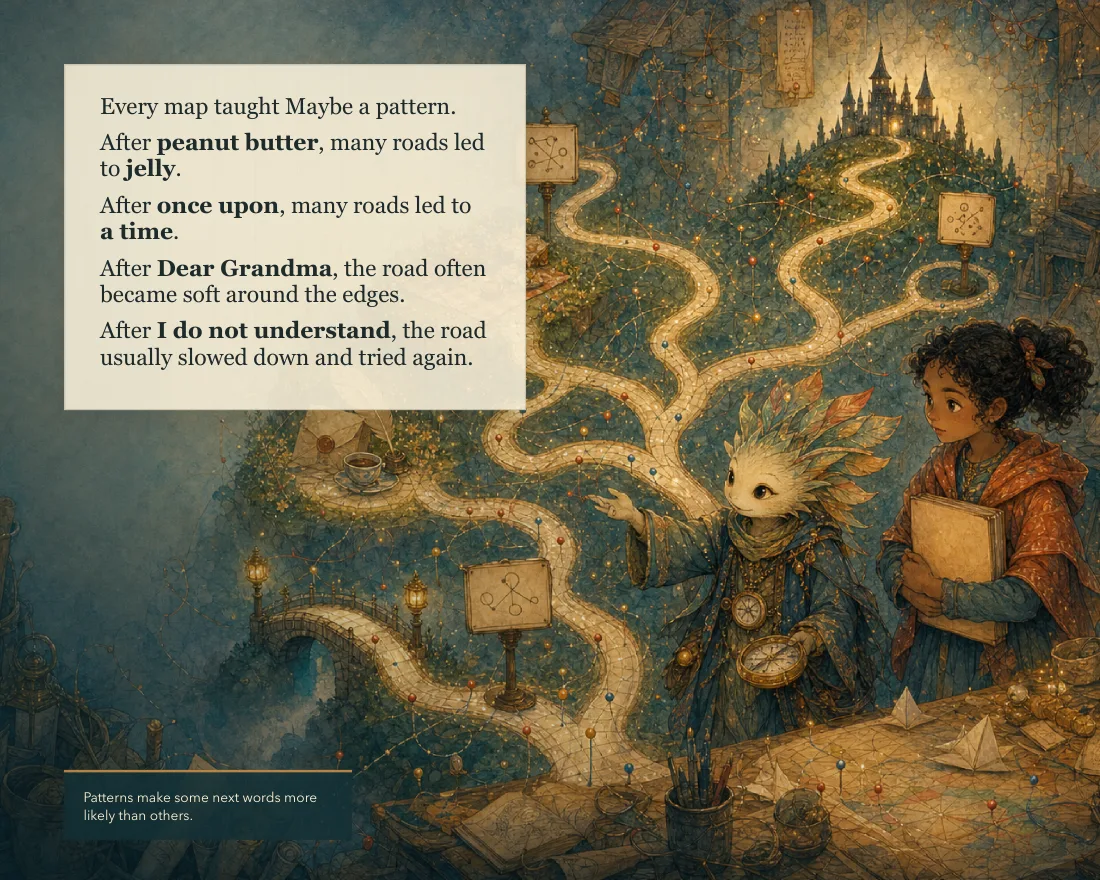
Page 06 / 14
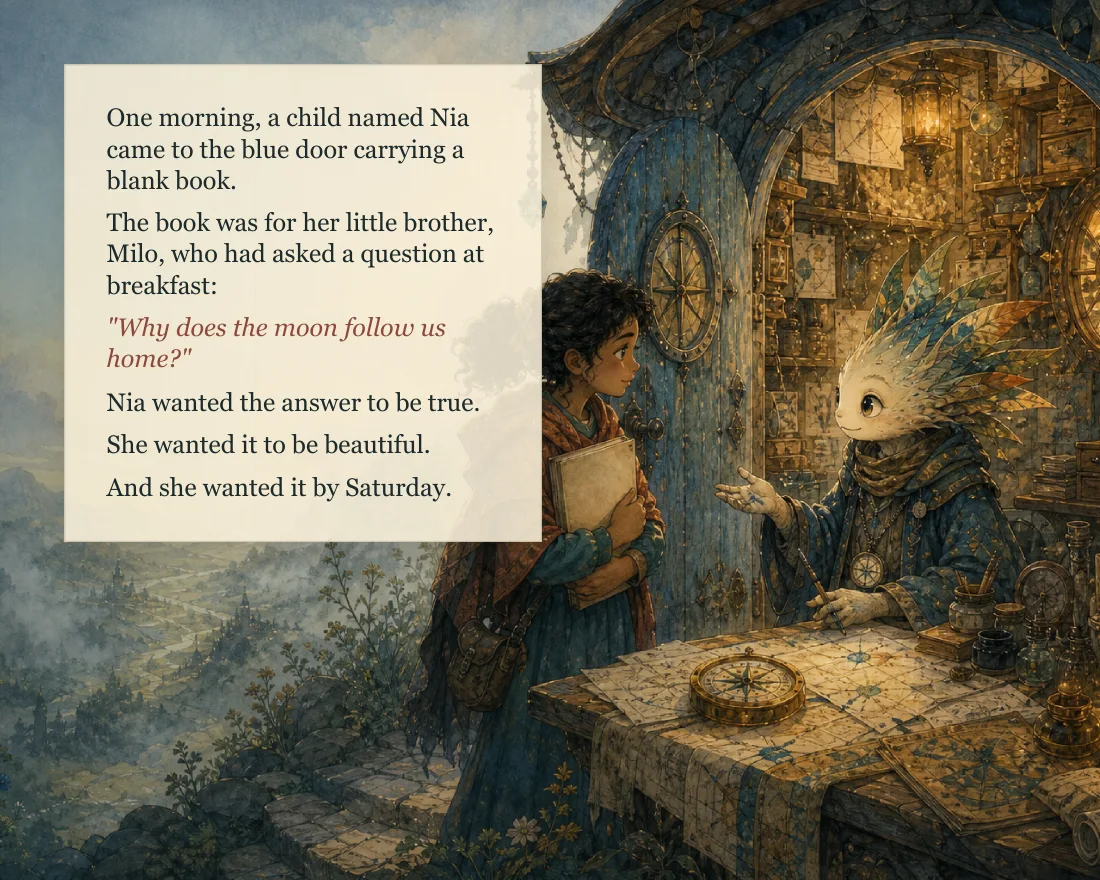
Page 07 / 14
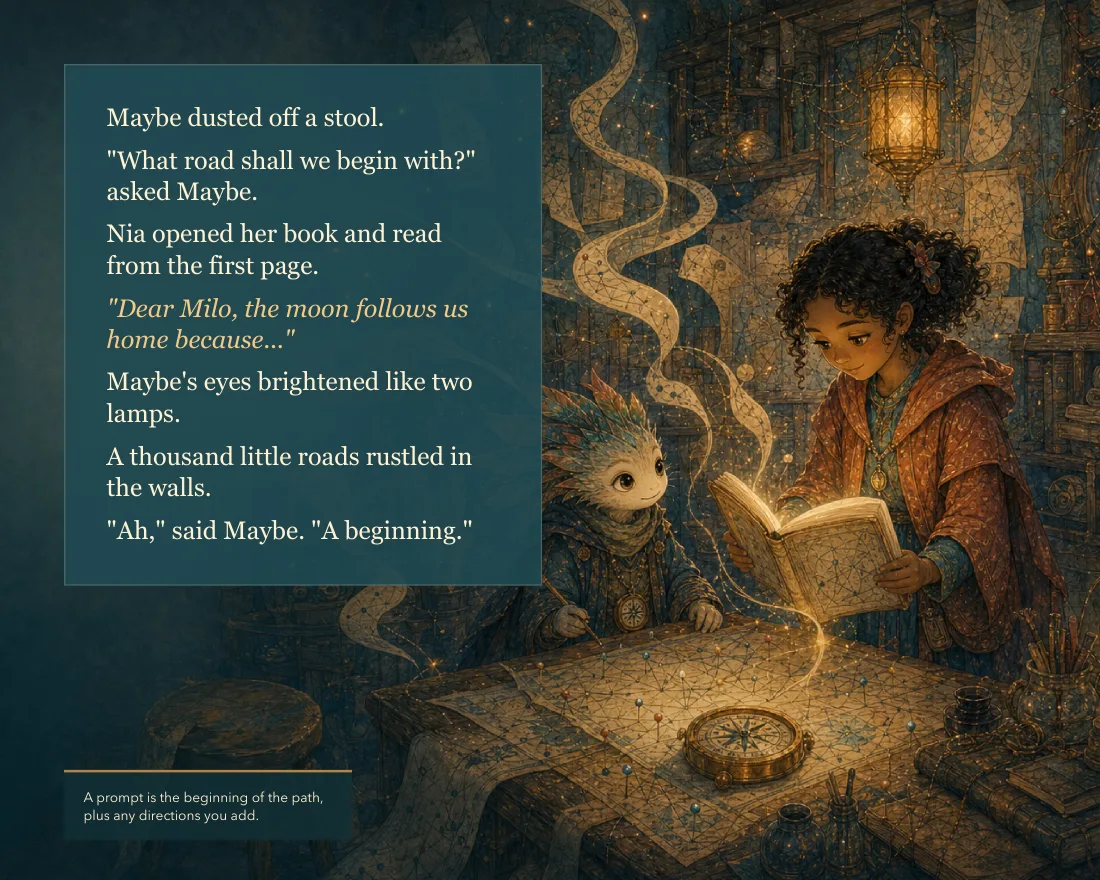
Page 08 / 14
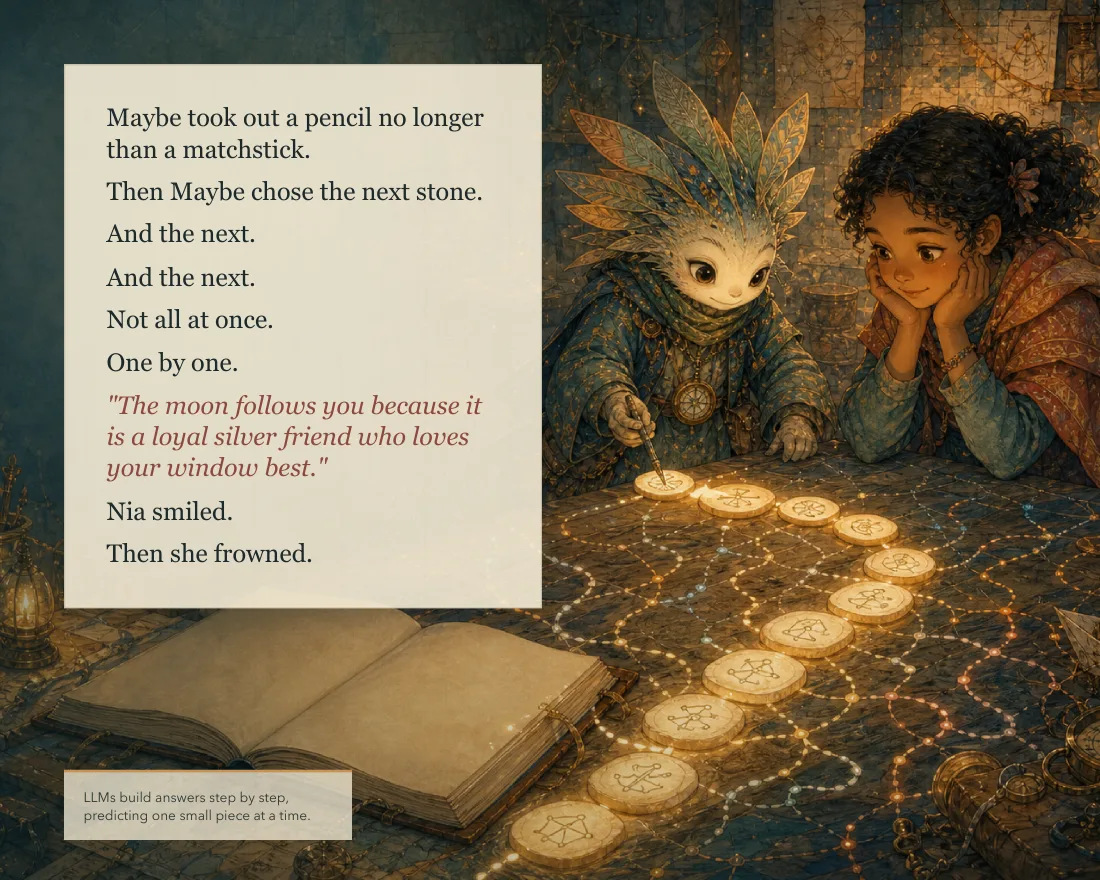
Page 09 / 14
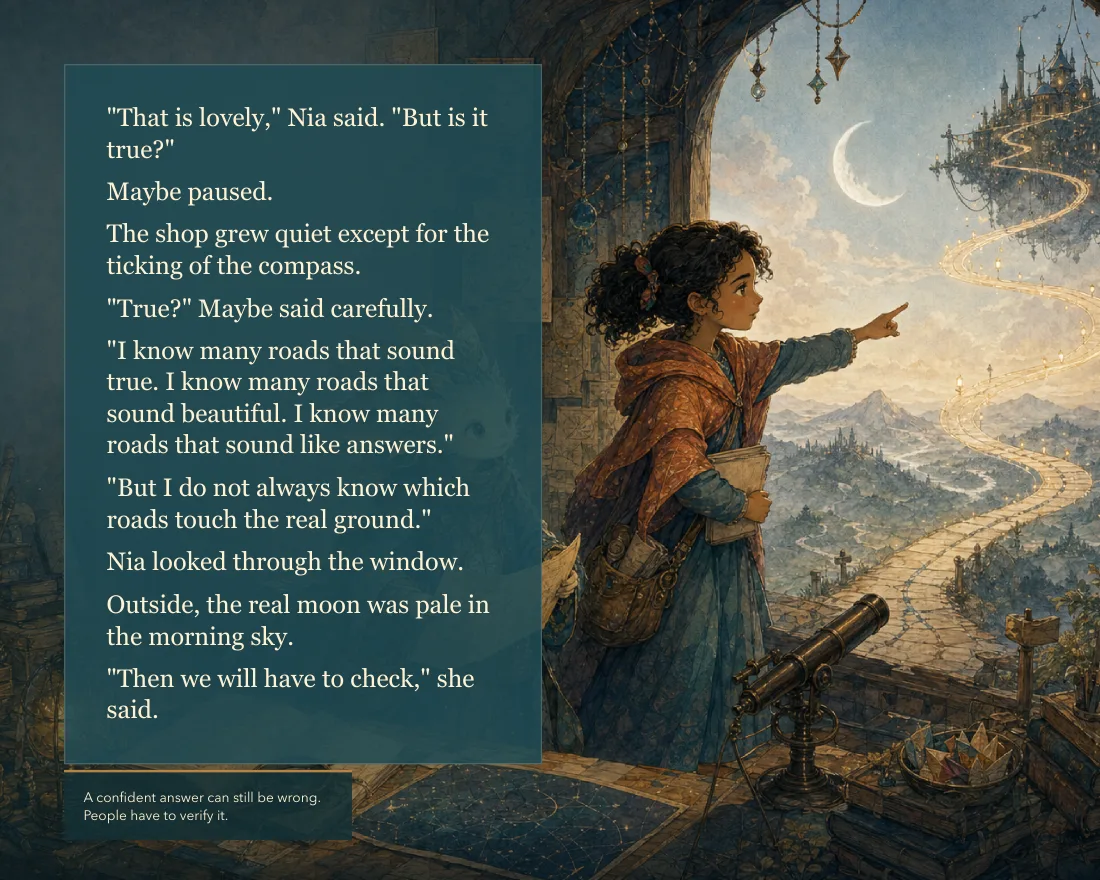
Page 10 / 14
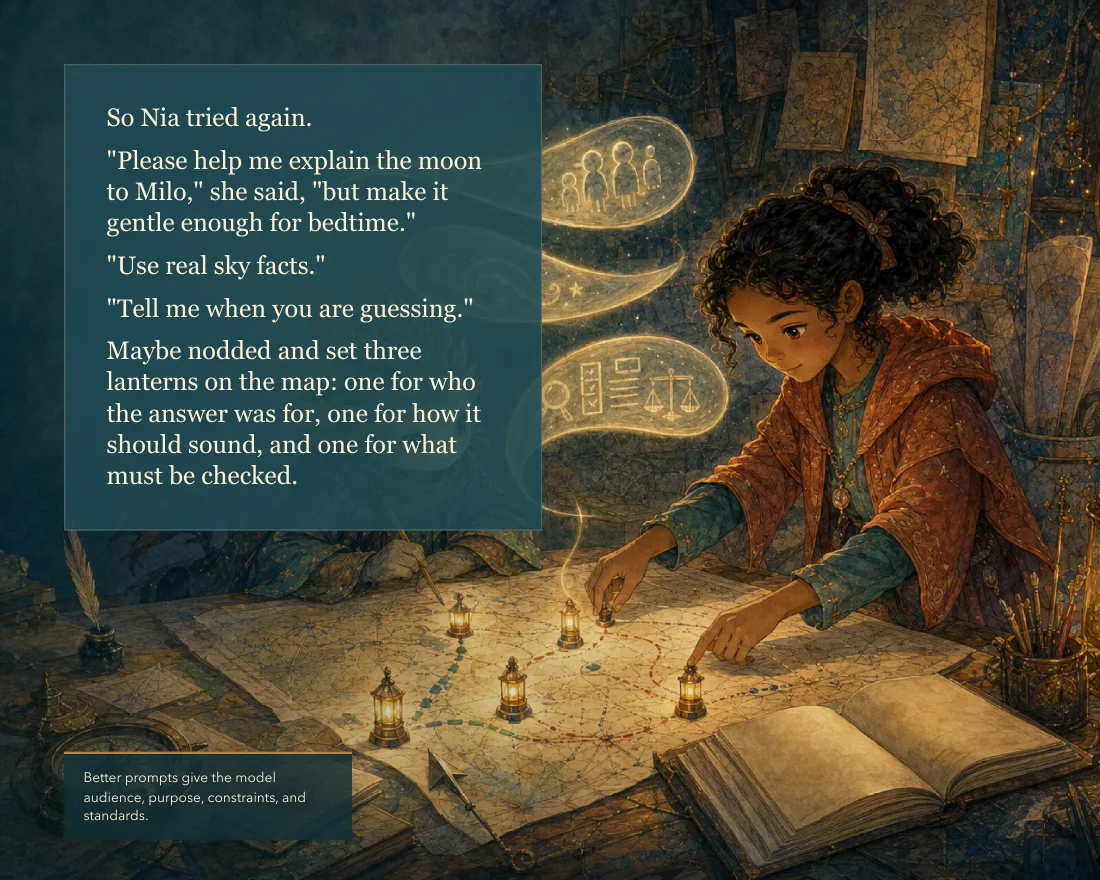
Page 11 / 14
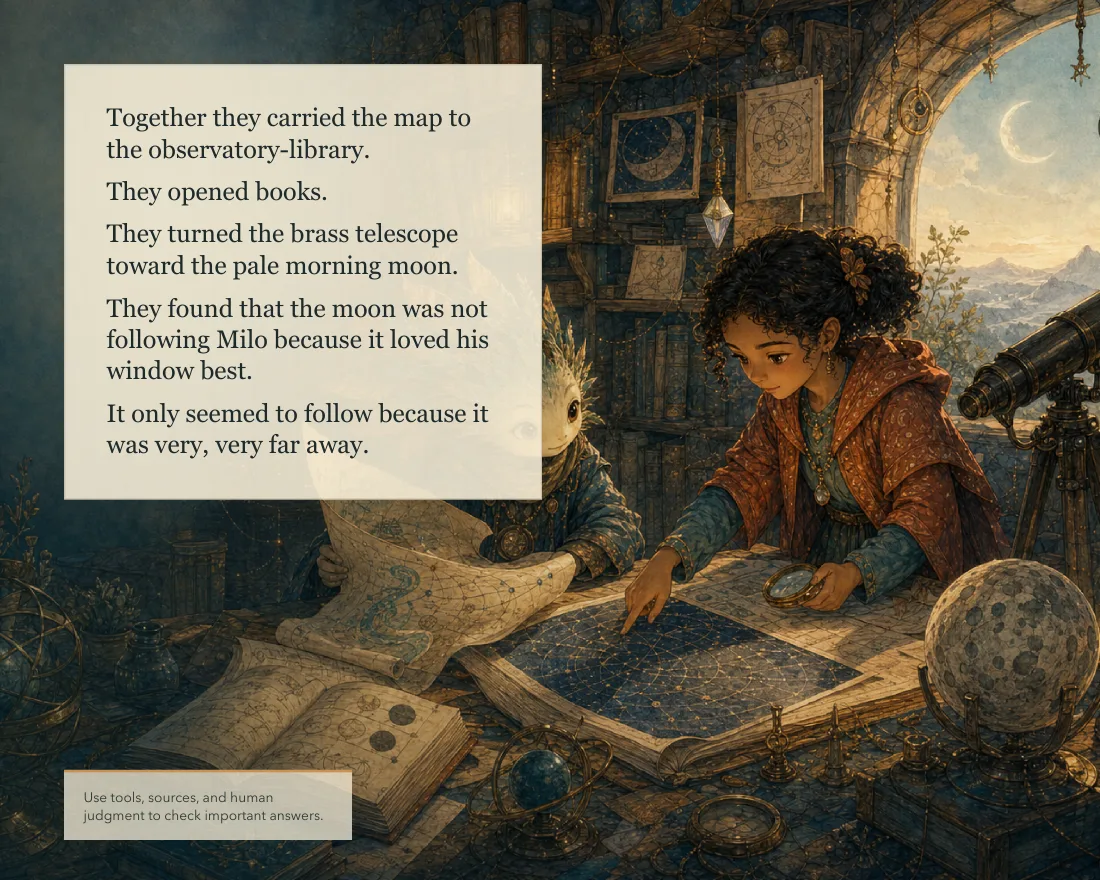
Page 12 / 14
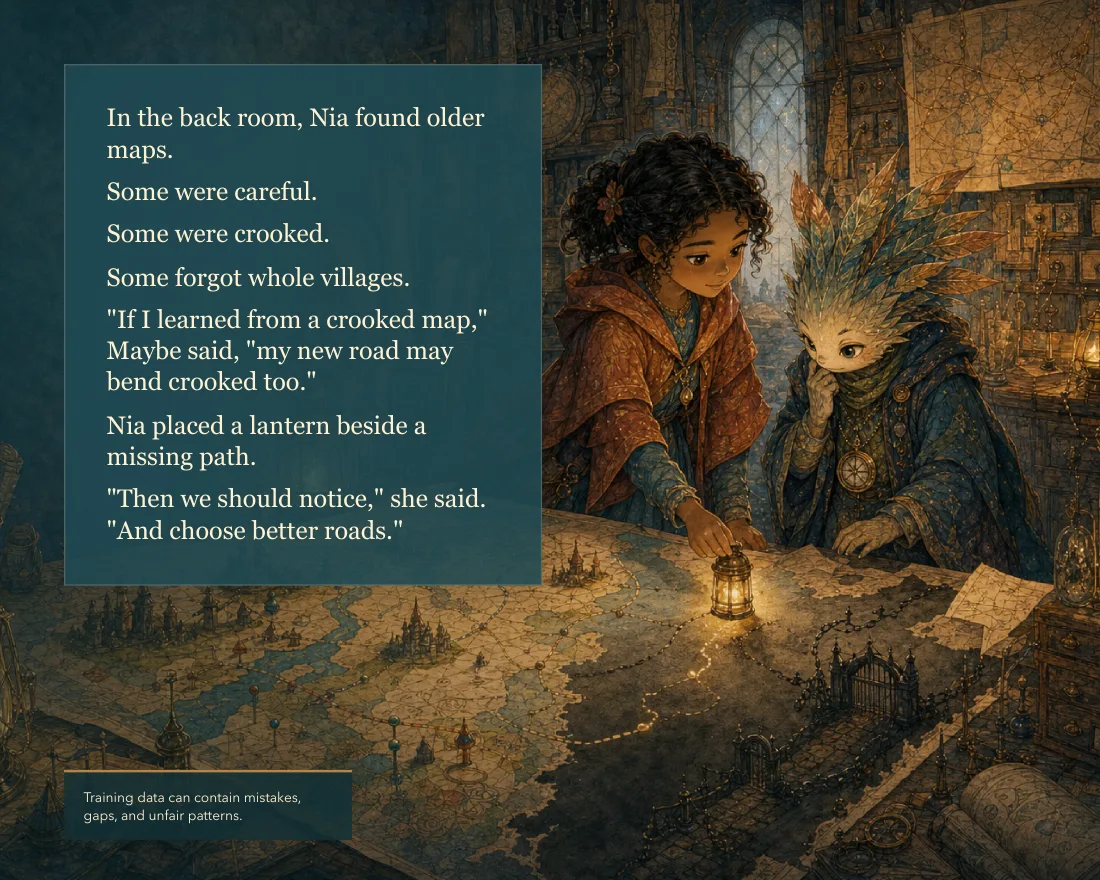
Page 13 / 14
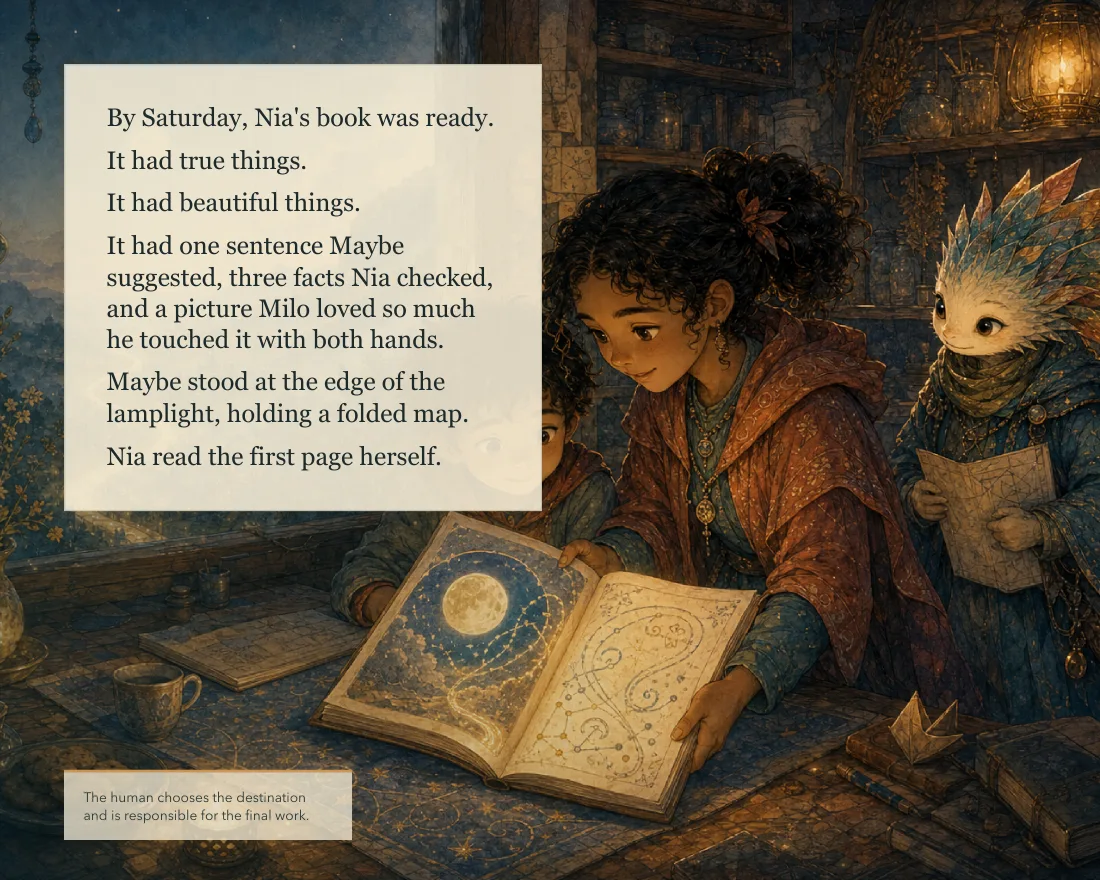
Page 14 / 14
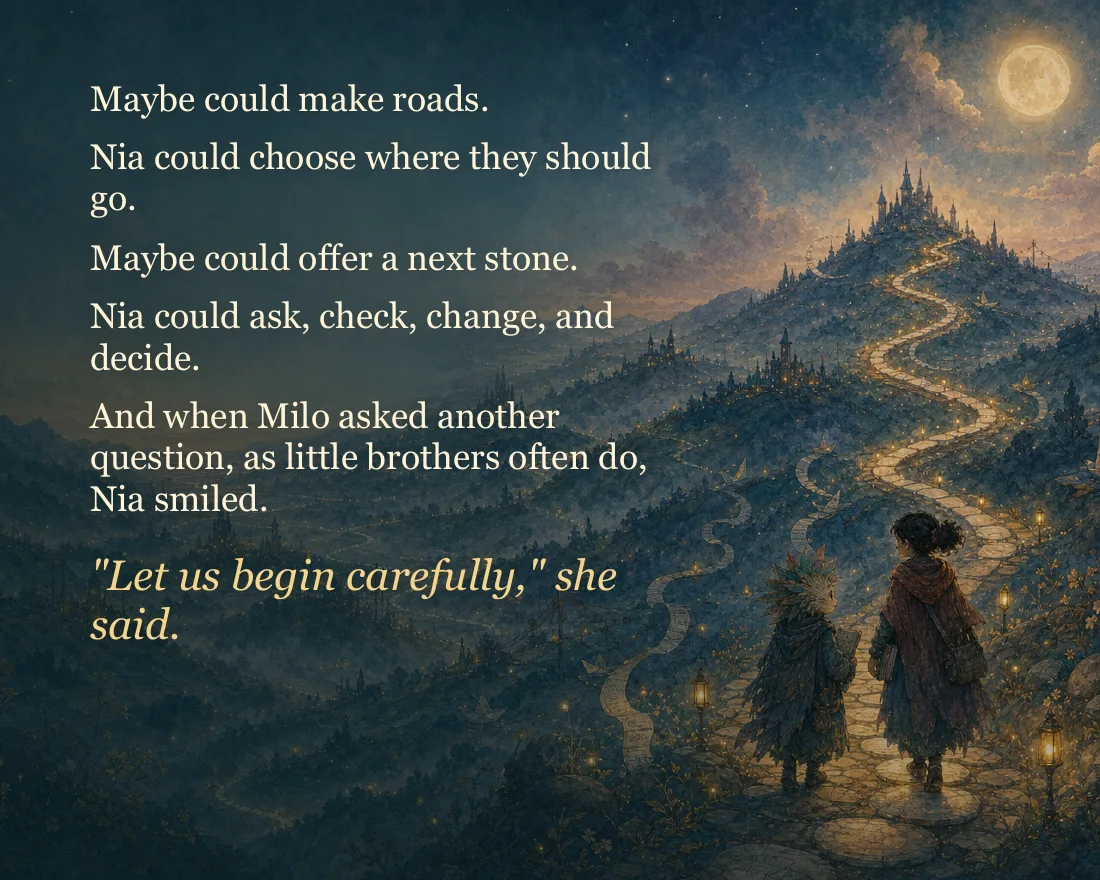
“I know many roads that sound true. I know many roads that sound beautiful. But I do not always know which roads touch the real ground.”
Every page is quietly teaching how a language model works.
The story holds up as a bedtime read, but each beat maps to something real about how an LLM operates. Here is the decoder ring.
- Maybe, the mapmaker of words. The language model itself. Not a wizard, not a person. A tool that works with patterns in language.
- Millions of maps, but Maybe never climbed a mountain. Training. The model has read enormous amounts of text about human experience without living any of it.
- After "peanut butter," many roads lead to "jelly." Probability. Patterns in the training data make some next words more likely than others.
- "Dear Milo, the moon follows us home because..." The prompt. The beginning of the path, plus any directions you add.
- Choosing the next stone, one by one. Generation. The model builds an answer one small piece at a time, each new word chosen based on everything placed before it.
- The loyal silver friend who loves your window best. A hallucination. Fluent, lovely, confident, and wrong. Maybe says it plainly: "I know many roads that sound true... but I do not always know which roads touch the real ground."
- "Then we will have to check." Verification. The telescope and the observatory-library are the tools, sources, and human judgment that confirm important answers.
- The three lanterns. A better prompt. Who the answer is for, how it should sound, and what must be checked: audience, purpose, constraints, standards.
- The crooked old maps. Training data quality. Maps with mistakes, gaps, and unfair patterns bend the new roads built from them.
- Nia reads the first page herself. Ownership. The human chooses the destination and is responsible for the final work.
That is a fairly complete mental model of an LLM, and it fits in a five-minute read-aloud.
I hit the credits wall on the very last page.
One part of this story I want to make sure makes it in, because it is the honest part. Right at the end of the build, I ran straight into the walls of my plan's permissions and credit allotment. I am on a company plan, and from what I have seen so far, this is one of the real downfalls of how those plans work right now.
I lucked out on timing. The wall came at the end rather than the middle. I would have done a couple of follow-ups and fixes, but I did not want to sit out the rest of the timer, so I took the book to a stopping point I could live with.
One mechanic worth knowing: when you hit the limit, Codex will finish whatever it is currently doing. You just cannot message it again until the next window opens. So the book you read above is the version that existed when the meter ran out, minor inconsistencies and all. I am calling that a feature of the story. The machine that wrote a book about its own limits got cut off by one of them.
You are not limited to website pages and boring PDFs.
Here is the takeaway I want marketers to leave with. The reflex is to point AI at the usual surfaces: website pages, blog posts, one-pagers, another PDF nobody opens. You are not limited to that. You can get the creative story juices flowing and use AI in genuinely creative ways.
It still needs your direction, your inspiration, your experience, and your stories. The book above did not come from a one-line prompt. It came from finding the analogy first, arguing about the outline, choosing an art style on purpose, and stitching every page together. But once you bring that, AI fills gaps you could not fill alone. I cannot illustrate. I do not have a spare month to learn. And yet there is a finished, illustrated book at the top of this page that did not exist this morning.
Storytelling with AI is real if you actually use it to extend your capabilities and shrink your time backlogs. A children's book that explains the machine that made it is just one shape that can take. Find yours.
Key Takeaways
- AI wrote and illustrated a complete 14-page children's book in one day, with one person directing the story, the analogy, and the art style.
- The book doubles as a real mental model of how LLMs work: training on examples, next-word probability, prompts as starting paths, token-by-token generation, hallucination, verification, and human ownership.
- The process was story-first: find the analogy, then the outline, then the art style, then stitch. A one-shot prompt would have produced something generic.
- Company-plan credit limits are a real constraint: the build got cut off at the final page, though Codex finishes its in-flight work before locking you out.
- Marketers are not limited to web pages and PDFs. AI can extend your creative range if you bring the direction, experience, and stories yourself.