Why Choosing a DAM Is Different for Global B2B SaaS
Most DAM advice assumes a creative or brand team is buying it to wrangle logos, product photography, and design files. That is a real job, and there are great tools for it. But if you run marketing or marketing ops at a global B2B SaaS company, the content that actually moves your revenue is something else: decks, one-pagers, case studies, competitive battle cards, demo videos, web pages, G2 reviews, the messaging house. And the people who need it are not just designers. They are sellers, marketers, customer success, RevOps, and partners, spread across regions, working in Slack, the CRM, browser tabs, and now AI tools all day.
So the question is not just "which DAM is best." It is two questions stacked: which kind of DAM does our content actually need, and how do we score the options against what matters for a global SaaS team. This article answers both. For the full vendor landscape (Adobe, Aprimo, Bynder, Brandfolder, Acquia DAM, Cloudinary, Frontify, MediaValet, Canto, Orange Logic), see the digital asset management software buyer's guide. This is the framework you run on top of it.
Step 1: Map Who Needs Content, and Where They Work
Before you look at a single feature or sit through a single demo, map two things: the content you have, and the people who use it. This is fifteen minutes of work and it usually decides the shortlist by itself.
The Fork: Creative DAM vs. Go-to-Market DAM
List your content types and tag each one. Brand and creative assets (logos, imagery, video masters, design files, templates) point you toward a creative DAM: Adobe Experience Manager Assets, Bynder, Brandfolder, Canto, Frontify, MediaValet, or Aprimo. These are built for designers and brand managers, with image renditions, templating, rights and licensing tracking, and CDN delivery for embedding assets on your website.
Go-to-market content (decks, case studies, one-pagers, competitive intel, customer videos, web pages, reviews) points you toward a go-to-market DAM: a system built for the content sales and marketing send to buyers, findable and on-brand for both people and AI. That is the category Masset is in. Plenty of global SaaS companies eventually run both, but most start with whichever pain is louder, and for SaaS it is almost always the go-to-market one. (For a head-to-head with the creative DAMs, see Masset vs. Bynder, Masset vs. Canto, Masset vs. Frontify, Masset vs. MediaValet, Masset vs. Aprimo, and Masset vs. Adobe Experience Manager Assets.)
The "Who Publishes What" Map
While you have the whiteboard out, sketch the governance map you will need later: who can upload content, who approves it before it goes live, who can share it externally, and who owns each content type. If three different teams "own" the case studies and nobody owns the competitive deck, that is a process problem a DAM can help with, but only if you decide the answer first.
Step 1 checklist:
- List every content type your GTM org uses, and tag each as creative-asset or go-to-market content.
- List every team that consumes content, and the primary tool they live in (Slack, Salesforce, HubSpot, browser, AI tools).
- Mark which content needs to be embedded on the web (CDN delivery) versus shared, sent, or referenced.
- Note who owns, approves, and can externally share each content type today.
Step 2: Score the Three Capabilities That Actually Matter for SaaS
Vendor feature lists are long and mostly the same. For a global B2B SaaS team, three capabilities separate a DAM that pays off from one that quietly becomes shelfware: analytics, governance, and marketing-automation integrations. Score each finalist 1 to 5 on each, and write down why.
Analytics: From Download Counts to Pipeline
A creative DAM will happily tell you which logo got downloaded last quarter. A SaaS team needs more: which content actually gets used, by which team and which region; how prospects engage with the content your reps share with them; and ideally, which content correlates with pipeline created and deals won. That last one is the difference between a content library and a content strategy.
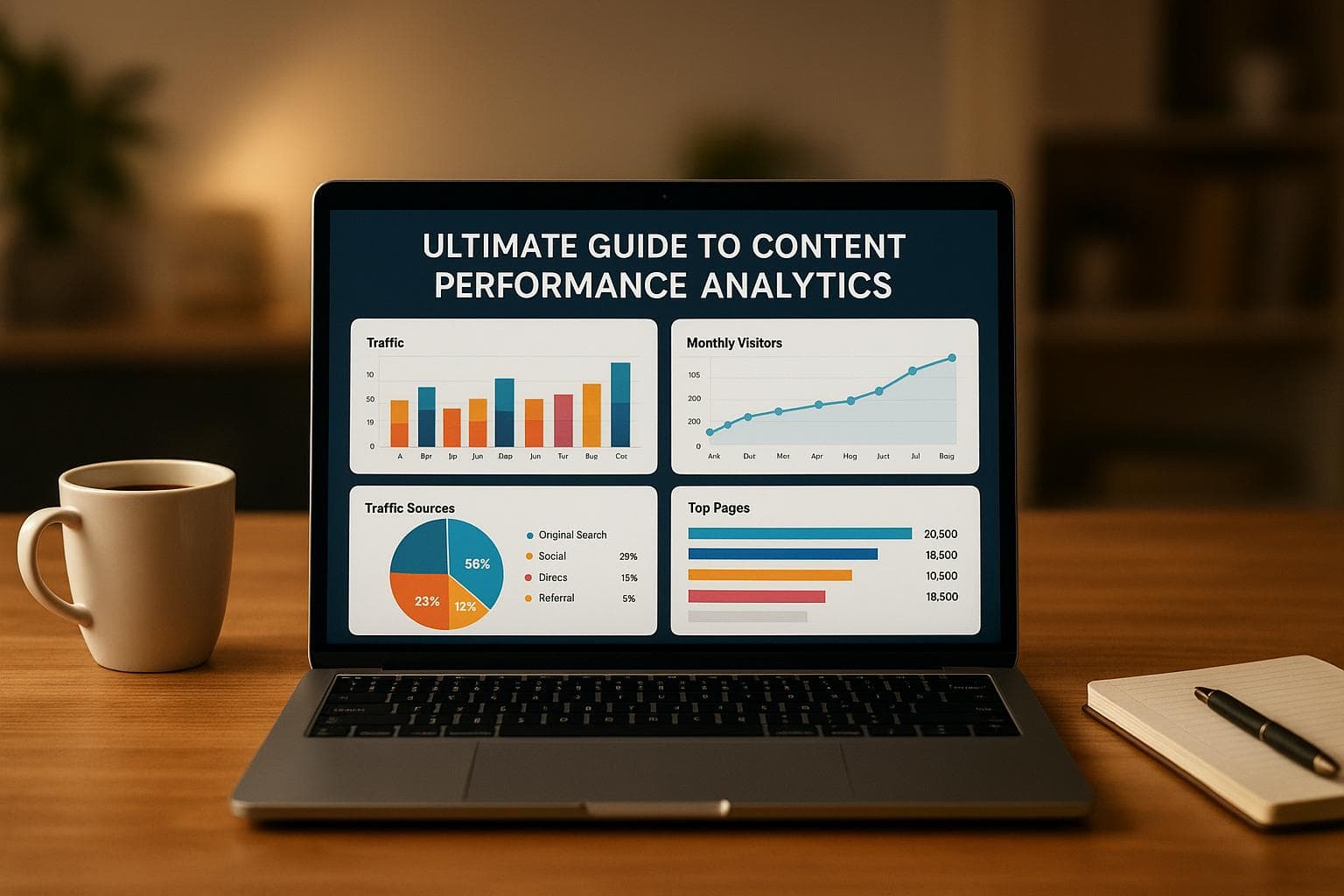
In the demo, do not let the vendor stay on the asset-usage dashboard. Ask: can your analytics tie a piece of content to a CRM opportunity? Can I see content engagement on a specific deal? Can I report on usage by region and team? If the answer is "you can export the data and join it yourself," that is a no. See what real GTM content analytics looks like on Masset Analytics, and the broader frame in our guide to content performance analytics.
Analytics questions to ask every vendor:
- Can content engagement be tied to a CRM opportunity or account?
- Can I see which content is used by team, by region, and over time, without exporting?
- Can I see how an external recipient engaged with content my rep shared (views, time, what they opened)?
- Can I identify content that is never used so I can retire or fix it?
Governance: Versioning, Approvals, and the "final_v3" Problem
Governance is where global SaaS teams get burned. The questions that matter: when you update an asset, does the change cascade to everything that has shared, embedded, or linked it, or do you now have two versions in the wild? Are there approval workflows so only on-brand, accurate content goes live? Can you set permissions by team and region? Can assets expire? Can you keep regional brand variants straight? Is there an audit log your security team will accept for SOC 2 and GDPR?
The single most useful governance feature for a SaaS team is real version control, the kind where one update propagates everywhere, so a rep physically cannot send the deck from two quarters ago. See how that works in Masset's version control and content workflows.
Governance questions to ask every vendor:
- When I update an asset, does the new version replace the old one everywhere it has been shared, embedded, or linked?
- Are there approval workflows before content is published or made shareable?
- Can I scope permissions and visibility by team, region, or business unit?
- Can assets expire automatically, and can I manage regional brand variants without duplicating libraries?
- Is there an audit trail my security and compliance teams will sign off on?
Marketing-Automation and GTM Integrations
A DAM that does not live in the tools your team already uses will not get used, full stop. For a B2B SaaS stack, the integrations that matter are Salesforce, HubSpot, Marketo or Pardot, Slack, Microsoft Teams, your CMS, and your sales-engagement tool. The distinction to probe: is it a native, two-way integration, a thin Zapier bridge with its own quotas, or a "we have an API, your team can build it"? Native is the only answer that survives contact with reality.
The practical test: when a rep is working a deal in Salesforce or asking a question in Slack, does the right, current, approved content show up there, or do they have to leave, log into the DAM, search, find, download, and come back? See Masset's integrations for the native version, and how content tools should work inside Slack.
Integration questions to ask every vendor:
- Which of my core tools have native, supported integrations (not Zapier, not "via API")?
- Does content surface inside Salesforce / HubSpot / Slack / Teams where my team already works?
- Does sharing content from inside those tools still get tracked and version-controlled?
- What breaks when one of those tools changes its API, and who fixes it?
Step 3: Pressure-Test for "Global"
A DAM that works for a 50-person US team can fall apart at global scale. Before you sign, pressure-test for the things that only show up when you have multiple regions, languages, and partners: regional brand variants and localization, agency and partner access (and the ability to revoke it cleanly), 24/7 uptime across time zones, data residency and compliance (GDPR, where data is stored), language support, and permission granularity by region and business unit. Ask the vendor for a reference customer running the platform across three or more regions, and actually call them.
The Partner-and-Agency Test
Channel partners and agencies are your highest-leverage content consumers globally, and your highest risk. The test: can you give a partner or agency a curated, on-brand subset of your content, scoped to what they should see, without handing over the whole library, and can you pull that access back the day the relationship ends? If the only option is "share the folder," that is a leak waiting to happen. Boards are how Masset handles this: curated, shareable content hubs you control. Run an agency yourself? See how agencies manage content for many clients in one place.
Global readiness checklist:
- Regional brand variants and localized content managed without duplicating the library.
- Granular permissions by region, business unit, and external party.
- Curated partner and agency portals you can provision and revoke.
- Data residency, GDPR posture, and an uptime track record that holds across time zones.
- At least one reference customer operating across multiple regions.
Step 4: The AI Question — Can Your AI Tools Actually Use Your Content?
In 2026 your team is asking ChatGPT, Claude, and Copilot to draft, summarize, and answer questions all day. If those tools cannot reach your approved content, they fill the gap with whatever they can find or invent, and your story drifts at machine speed. (More on that in what story drift is and why it erodes pipeline.)
Here is the catch most buyers miss: many DAMs now have AI inside the platform, auto-tagging, smart search, even agents, but it is locked in. Outside AI tools cannot get to it. The capability that actually matters is a native MCP server (Model Context Protocol, the open standard AI tools use to connect to external data) so Claude, ChatGPT, Copilot, and Cursor can search, read, and reason about your content directly. As of 2026, almost no traditional DAM ships one for the core product. Cloudinary and Frontify have scoped MCP servers (media operations, brand knowledge); Adobe has MCP for the AEM platform. Masset ships a generally available MCP server with 35 tools (21 reads, 14 writes) for content search, analytics, and actions like creating shares and Boards. See how Masset's MCP works.
The AI question to ask every vendor:
- Do you have a native, generally available MCP server for your core product (not a roadmap item, not a beta, not a Zapier bridge)?
- What exactly does it expose: search, content retrieval, analytics, organizational context?
- Which AI tools work with it today, and what does setup look like?
- If you do not have one, what do my reps do when they ask ChatGPT a question about our product?
Step 5: Cost, Time-to-Value, and the Adoption Test
The most expensive DAM you will ever buy is the one your team does not open. The enterprise platforms (Adobe AEM Assets, Aprimo, OpenText, Orange Logic) are six-figure, multi-month implementations, usually with a partner. That is the right call if your problem is governance-grade brand asset management at massive scale. If your problem is "our reps cannot find the deck and AI cannot reach our messaging," it is overkill, and the long rollout actively works against you, because by the time it is live, the people who needed it have already gone back to their own folders.
For a global B2B SaaS team, optimize for time-to-value and adoption: a platform that onboards in days, prices transparently, and that marketers will actually use on day one because it lives in the tools they already work in. Masset, for what it is worth, is unlimited seats, month-to-month, no long-term contracts, transparent pricing, and live in days, not months. Teams see roughly 4x content usage after rollout, and the platform has held above 99.9% uptime over the last two years (SOC 2 compliant, SSO included). Whatever you choose, run a real two-week pilot with real users before you sign.
Cost and adoption questions to ask every vendor:
- How long until first real value: days, weeks, or months with a partner?
- Does it live inside the tools my team already uses, or is it another login and another tab?
- Is pricing transparent and published, or quote-only? Per-seat or flat? Month-to-month or annual lock-in?
- Can I run a pilot with my actual team before committing, and what does success look like in that pilot?
“The most expensive DAM you'll ever buy is the one your team doesn't open. Score for adoption like it's the criterion that decides everything, because it is.”
Putting It Together: The DAM Decision Matrix
Take your two or three finalists and score them. Here is a weighting we would suggest as a starting point for a global B2B SaaS team. Adjust the weights to your situation, but write them down before you score, not after.
| Criterion | Suggested weight | What you are scoring |
|---|---|---|
| Fit for your content type | 20% | Creative-asset DAM vs. go-to-market DAM, against the map from Step 1 |
| Analytics | 15% | Usage to engagement to pipeline, not just downloads |
| Governance | 15% | Versioning that cascades, approvals, regional permissions, compliance |
| Marketing-automation & GTM integrations | 10% | Native integrations with your real stack, content where your team works |
| Global readiness | 15% | Regions, localization, partner portals, data residency, uptime |
| AI access | 15% | Native MCP server, content reachable by outside AI tools |
| Time-to-value & adoption | 10% | Onboarding speed, in-the-flow usage, pricing transparency |
Score each finalist 1 to 5 on each row, multiply by the weight, sum it up. The exact number is not the point. The point is that the scoring conversation forces your team to say out loud what you are actually optimizing for, which is usually where the real disagreement was hiding.
When You Need a Creative DAM, a Go-to-Market DAM, or Both
For a lot of global B2B SaaS companies, the honest answer is both: a creative DAM (Adobe, Bynder, Brandfolder) for the design team's brand and creative assets, and a go-to-market DAM (Masset) for the decks, case studies, competitive intel, and videos that sales and marketing send to buyers. Different teams, different content, both genuinely DAMs.
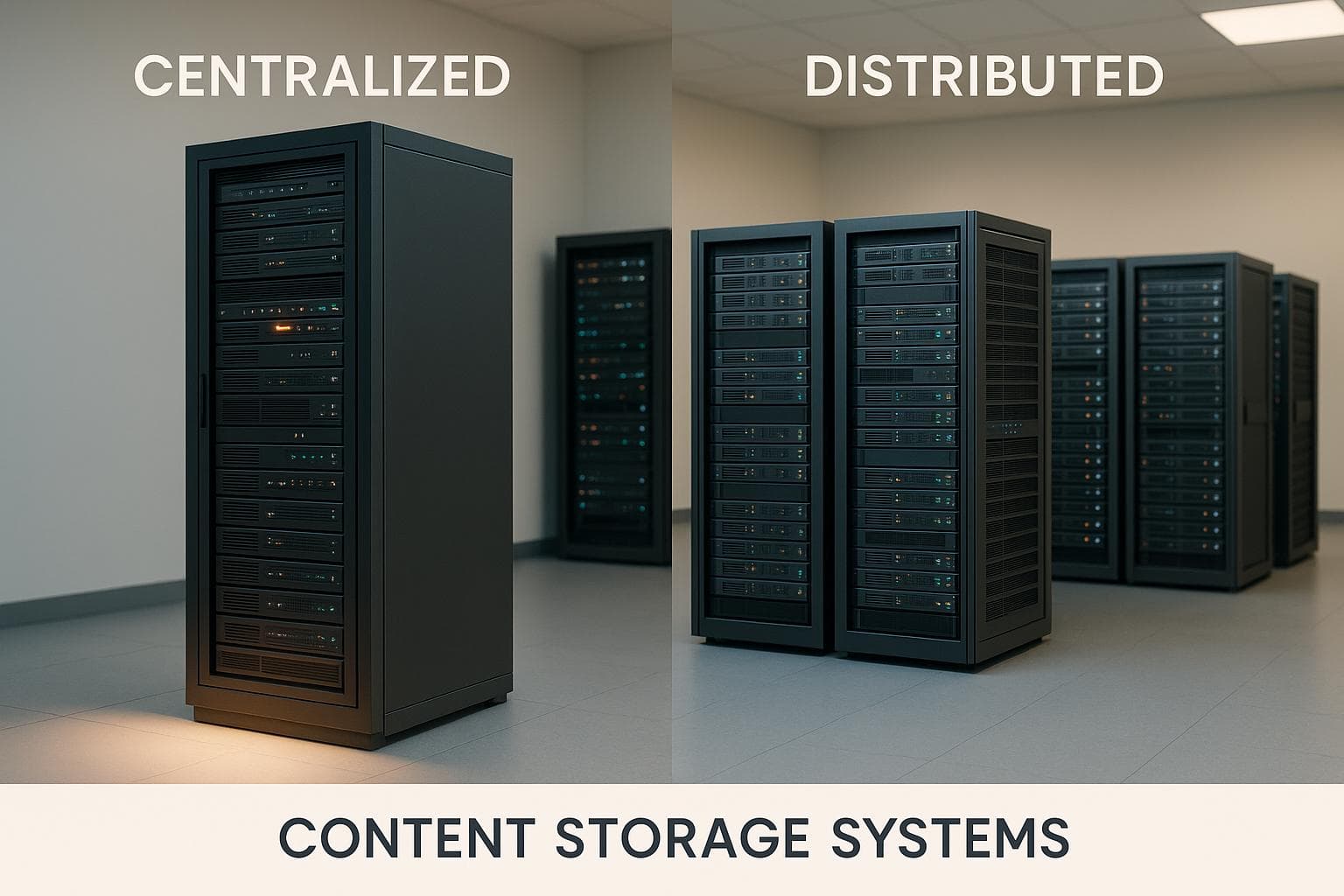
But if you only have budget or appetite for one, rank the pain. If your loudest problem is "agencies keep using the old logo and creative production is a bottleneck," start with a creative DAM. If it is "our reps cannot find the right deck, half our content goes unused, and AI tools have no idea what our product does" (and for SaaS, it usually is), start with the go-to-market DAM. You can always add the other later. See also centralized vs. distributed content storage and why content teams struggle with asset organization.
Where Masset Fits
Masset is the AI-ready DAM built for B2B go-to-market teams: one home for the decks, one-pagers, case studies, competitive intel, and videos that sales and marketing send to buyers, with content analytics tied to pipeline, version control that cascades, approval workflows, native integrations with Salesforce, HubSpot, Slack, and Teams, curated partner-facing boards, and a generally available MCP server so Claude, ChatGPT, and Copilot work from your real, approved content instead of guessing. Unlimited seats, month-to-month, live in days.
If you want the broader vendor landscape, read the digital asset management software buyer's guide. If you want to see how Masset compares to the creative DAMs, see Masset vs. Bynder and Masset vs. Adobe Experience Manager Assets. And if you would rather just see it in action, watch a demo.
Key Takeaways
- Choosing a DAM for global B2B SaaS starts with one fork: a creative-asset DAM (for designers and brand teams) or a go-to-market DAM (for the content sales and marketing send to buyers). Map your content and people before you look at any features.
- Three capabilities separate a DAM that pays off from one that becomes shelfware: analytics that connect content to pipeline (not just downloads), governance with version control that cascades everywhere, and native integrations with your real stack (Salesforce, HubSpot, Slack, Teams).
- Pressure-test for "global": regional brand variants, localization, granular permissions by region, curated partner and agency portals, data residency, and an uptime track record that holds across time zones.
- In 2026, ask whether the DAM has a native, generally available MCP server so AI tools like Claude, ChatGPT, and Copilot can actually reach your content. Most traditional DAMs don't — their AI is locked inside the platform.
- Score your finalists on a weighted matrix, but optimize hardest for time-to-value and adoption. The most expensive DAM is the one nobody uses; run a real pilot with real users before you sign.